
On July 9th, 2011, in accordance with a January referendum during the same year where 98.83% of South Sudanese voters opted for secession, the country of South Sudan was born. For just under two decades, it has been known as the world’s youngest country, beating out Kosovo in 2008. However, in a few years’ time, it is likely the crown of the youngest country will be usurped by a contender that underwent a similar process: Bougainville.
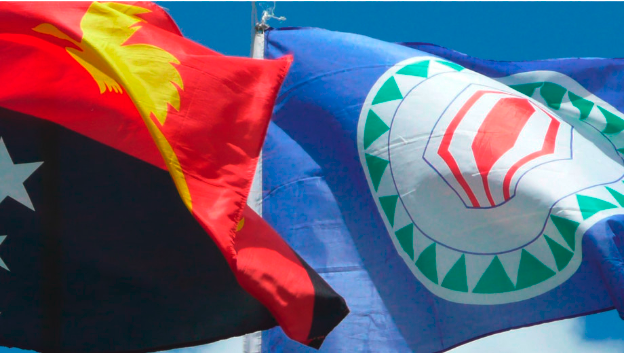
Between November 23 and December 7 in 2019, a non-binding independence referendum was held in Papua New Guinea’s autonomous region. Voters were presented with two options: greater autonomy within the Oceanic nation, or opt for full independence. With approximately 180,000 ballots counted, the result was overwhelmingly in favor of independence, with the decision receiving 98.31% of the vote. In a remarkable turnout, nearly 87% of registered voters came out to make their voices heard. Two years later, in July 2021, an agreement was reached between the governments of Papua New Guinea and Bougainville with the stipulation that the island would become fully sovereign by 2027. As of October 2025, the ratification of the agreement has not been completed. In recent weeks, a bipartisan parliamentary committee chaired by Rabaul MP Dr Allan Marat has been holding hearings across Bougainville, consulting with local leaders and representatives on the region’s post-referendum future. The committee’s findings will be presented to Papua New Guinea’s National Parliament on November 18, 2025, during its final sitting of the year, a crucial moment in determining whether Bougainville’s independence will proceed on the projected timeline. Ensuring that the voices and aspirations of Bougainvilleans are heard is paramount to paving the way for the world’s newest nation.
Evidenced by the ever-expanding gap between the referendum and ratification, the road to Bougainville’s independence has been long and arduous. The referendum itself follows a 2001 agreement between the government of Papua New Guinea and the Autonomous Bougainville Government, which brought an end to the Bougainvillean Civil War, fought between December 1988 to April 1998. The armed conflict, despite its relatively small scale, resulted in the deaths of thousands on the island. The war itself stemmed from multiple grievances, one of which relates to distinct cultural identities, marked by differences in skin tone and traditions. Another regards operation of the Panguna Copper Mine, which had operated since 1972 and accounted for nearly 40% of Papua New Guinea’s export earnings. Not to mention, there was the exclusion of Bougainvilleans from any compensation for the utilization of their land or profits. Together, these factors became catalysts behind the civil war. Once Bill Skate was elected Prime Minister of Papua New Guinea, he opted for a peaceful resolution, opposing the use of the army to end the conflict. Shortly after he acceded to office, talks were held in Honiara and Burnham in New Zealand, culminating in a truce and an agreement to demilitarize the island. Bougainvillean military leaders Kauona and Kaubi later entered peace talks with the Skate government in Christchurch, New Zealand, signing the Lincoln Agreement in January 1998. This accord oversaw the withdrawal of Papua New Guinean soldiers from the island and the disarmament of Bougainvillean revolutionary forces. With the conflict winding down, a framework for the creation of an autonomous government was established under the aforementioned 2001 peace agreement.
The modern history of Bougainville has been paved with violence, disagreement, and dissatisfaction with Papua New Guinea. Yet, despite all of this, diplomacy has prevailed, delivering peace, autonomy, and now the prospect of independence. In March 2025, the Bougainville Independence Leaders Consultation Forum recommended September 1, 2027, as the date for independence. More recently, in November 2025, the Bougainville Constituent Assembly was established, set to lead the constitutional process. It will debate and discuss the draft constitution in preparation for a finalized document pending national ratification. With independence seemingly inevitable, the island nation would face formidable challenges, including building a strong economy, governing itself, and managing relations with Papua New Guinea, other Pacific countries, and the world at large. Although these challenges are great, the island, which has shown notable determination to follow its own path, will undoubtedly possess the resolve to march forward.
 The Art of Procrastination