
This October, I had the extraordinary opportunity to speak at Être Girls live TED-Ed event in New York City about an issue that does not receive enough attention: CPR equity for women. The opportunity to stand on stage, share my research and personal experience, and highlight a small yet critical change that could save lives was an experience I will treasure forever.
I started my talk by asking everyone in the audience to put their hands over the center of their chest and push down twice to perform CPR in that instant. The majority hesitated, which immediately pointed to the potential for a greater problem: all over the United States and Europe, women receive bystander CPR 14% less often than men. In the United Kingdom, only 67% of women receive CPR compared with 76% of men. Nearly one out of every four people admit they would feel uneasy touching a woman’s chest during an emergency. This hesitation isn’t born out of unwillingness; it comes from how the CPR is taught.
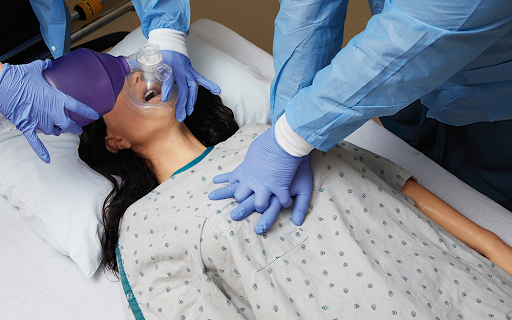
Most training mannequins are based on male bodies and often lack realistic female anatomy. Practicing only on these torsos leaves responders unprepared for female patients. When the person in front of you looks different from the body you trained on, hesitation occurs naturally. The solution is simple but powerful: more female mannequins and breast overlay attachments in CPR training. Although companies are beginning to produce these models, widespread adoption is still necessary. Training on female mannequins builds confidence and muscle memory that can make all the difference in a real-life emergency.
As an EMT student, I think a lot about confidence and repetition. A CPR call is never predictable, and hesitation costs lives. Training with diverse bodies helps responders prepare for any outcome. In emergencies, every minute counts, but repeated practice will turn hesitation into action across diverse scenarios.
CPR inequity is part of a much larger problem: health inequity. Women have historically been underrepresented as medical research subjects, including in studies concerning heart disease, despite heart disease being the most common cause of death for women in the United States. In addressing disparities in training, we take a small but important first step toward equality in survival. A change in design that may seem insignificant could end up saving lives-a female mannequin.
I closed the talk by showing my CPR card and encouraging the audience to consider their role in emergency care. No role is too big or too small. Anyone can be part of the solution, and access to proper training can directly impact survival rates. Equality in practice is the first step toward equality in outcomes, and empowering people with the confidence and knowledge to act saves lives.
Feel free to watch my talk linked here: https://www.youtube.com/watch?v=fi-sM-cR9MA
Works Cited:
Cruel, Synclaire. “No Matter Where They Live Women Are Less Likely to Get Bystander CPR .” Duke University School of Medicine, 27 Feb. 2024, medschool.duke.edu/news/no-matter-where-they-live-women-are-less-likely-get-bystander-cpr.
 The Odd Feeling of Deja Vu