Going outside is a core part of a child’s development for independence. Whether it be visiting their friend’s house, going to the park or simply walking to school, spending time outdoors fosters independence within a child and makes room for socialization and growth, as well as a better understanding of their community. However, America’s suburbs struggle to build ergonomic towns that allow the most basic form of transportation: walking.
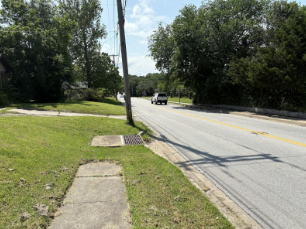
America’s infrastructure is centered around the usage of cars, rather than any form of pedestrian services or public transportation. The average road is 10 to 11 feet wide, while the average sidewalk spans around four to five feet. This is double the amount of space for motor vehicles compared to pedestrians. But this does not even take into account the inaccessibility to sidewalks and crosswalks. The modern suburban neighborhoods simply do not have adequate sidewalks. This is due to a variety of reasons such as development costs, the priority of cars or legal obstacles.
Surprisingly, although sidewalks service the entire community, the maintenance, cost and legal liability are all placed onto the responsibility of the homeowner whose house faces the sidewalk. So, if anyone were to injure themselves on the poorly maintained sidewalks, the government would be cleared of any blame by citing the homeowner’s duty to maintain and fix sidewalks for the public. This loophole allows any government to evade responsibility and any permanent, meaningful change to instill more pedestrian safety. The lack of basic protections for pedestrians shows how little America’s infrastructure cares for commuters, and feeds into the precedence of cars over people. But what does this have to do with childrens’ independence? Well, since there is little to none accessible public transportation or basic sidewalks in the average suburban area, children must either a) stay in, b) walk unsafe roads or c) get driven around by a parent or guardian. Most children these days are driven around everywhere.
American children are quite literally forced into asking for rides or buying a car to get around anywhere, really. This creates a strain on all parties, as one is dependent on the other for transportation, while the other has to be available and willing to drive the child to, say, a friend’s house. Kids have no chance of becoming self-reliant if a simple trip to the grocery store becomes impossible without a car. It is simply unrealistic to force everyone within a single household to own a car; not only is it extremely costly due to insurance and gas prices, but it further perpetrates the sedentary lifestyle that comes with dependence on motorized transportation.
Children —and everyone else— are entitled to walkable towns for healthy growth and development, and if America wants to offer their kids more autonomy and independence, they need to improve their pedestrian infrastructure. The lack of adequate sidewalks and the occasional bike lanes are not enough to support and protect pedestrians or cyclists. As a result, this feeds into America’s irrational fear of letting their child walk home, as it is either inaccessible or unsafe. However, with improvement in governmental laws and a healthy effort to bring awareness and change to American infrastructure, walkways and other public amenities can be provided so that children may foster independence, and people from all walks of life can safely travel around their community with ease.
Works Cited:
Appelbaum, Alec. “Choosing the Unwalkable Suburbs, or Settling for Them?” Bloomberg.com, 10 May 2016, https://www.bloomberg.com/news/articles/2016-05-10/choosing-the-unwalkable-suburbs-or-settling-for-them. Accessed 18 December 2025.
Isenberg, Robert. “The Frustrating Reasons Why Cities In America Are Not Walkable.” Explore, 16 November 2024, https://www.explore.com/1708215/unexpected-reasons-why-cities-america-not-walkable/. Accessed 18 December 2025.
“Walkable communities: Impacts on residents’ physical and social health: Researchers from Texas A&M University studied residents in a newly developed ‘walkable community’ in Austin, Texas to see how it changed their habits for physical activity and …” PubMed Central, https://pmc.ncbi.nlm.nih.gov/articles/PMC8776244/. Accessed 18 December 2025.
 Automation at Home Plate: Coming Era of Robo-Umpiring